Last month, Dave's company posted another loss. He and his business partner spent an afternoon reviewing the numbers. On paper, expenses hadn't increased, and revenue hadn't dropped. So where was the money going? The accounting team dug through every report and finally traced the problem to a procurement contract signed six months earlier. Buried in the fine print was an automatic renewal clause with a price escalation — Dave had skimmed past it and signed. Over six months, it cost his company over twenty thousand dollars. Dave's story isn't unusual. A lot of SME owners have adopted the same mindset in recent years: times are tight, so cut costs. Don't hire. Don't raise salaries. Don't spend unless you absolutely have to. The result? They still spend what they should, and they lose big on what they shouldn't. Approval workflows run on human chases. Month-end expense reconciliation keeps the finance team at their desks until 2 AM, and discrepancies still slip through. Contracts get reviewed by the owner, who has to muscle through the legalese — until a missed clause triggers a dispute that costs far more than prevention ever would. This isn't one company's problem. The real hidden costs in most SMEs aren't paper, electricity, or office supplies. They're buried inside the daily grind of manual office processes — the more you try to save on people, the more you end up spending on people. The more afraid you are to spend, the more you lose. And with modern tax enforcement tightening across the board, the risks of running on manual processes are getting harder to ignore. Let's start with finance. At most small and mid-size companies, the accounting team does the work of three people. High volumes of expense reports, messy receipts, line-by-line manual checks — all piled up at month-end, running entirely on human eyes and memory. With digital tax reporting systems now in place across most jurisdictions, every invoice issued and every payment received is fully traceable. When vendor details don't match, amounts don't align, or sequential invoice numbers get split across different submissions, the system flags it immediately. The honest truth is that manual audit accuracy can never be 100%. But today's regulatory environment already treats zero errors as the baseline. One mismatch, one questionable invoice — at best it gets kicked back for rework, at worst it triggers an audit, a penalty, or a tax investigation. A friend who runs a trading company ended up with a $12,000 fine last year because a fake invoice slipped through a manual expense review and wasn't caught. And that's just the ones that get caught. What about the hidden damage? Rework costs. Employee morale dropping because reimbursements take forever. Accountants burning out and quitting. All of it traces back to one link in the chain — manual review — and slowly bleeds the company dry from the inside. Now let's talk about contracts. Most SMEs don't have in-house legal counsel. Contracts are reviewed by the owner or a department head. But honestly, when you're looking at a three-to-five-page sales agreement or procurement contract, the clauses on liability, breach, and dispute resolution aren't things an untrained eye can easily assess. Real story: a software services company signed an annual service contract with a client. The scope of work was vaguely defined — just a few broad line items. Three months in, the client claimed a specific feature wasn't covered and refused to pay. The company tried to push back, but when they went back to the contract, they realized the scope had never been clearly defined. Fifteen thousand dollars in outstanding payments. Six months of back-and-forth. They eventually settled at a discount just to close the case. These losses don't happen because owners aren't careful. They happen because even careful people can't catch what they aren't trained to see. And every missed clause plants a landmine for the next business dispute. Then there's the one that's easy to overlook — institutional knowledge. Company policies, contract templates, project documentation, client records — all scattered across individual laptops, chat threads, and shared drives. When an employee leaves, the knowledge leaves with them. When a new hire joins, they can't find anything. The same contract trap someone fell into last year gets stepped into again by someone new. The same training content gets delivered from scratch every time someone new walks in. These might seem like small, scattered problems. But what they really represent is the silent erosion of your company's intellectual assets — the experience, lessons, and institutional memory you've paid for, slowly draining out the door. So let's come back to cost cutting and efficiency. Real efficiency isn't about cutting people, slashing budgets, or eliminating perks. It's about taking the work that's been held together by human endurance and handing it to the right tools. That's exactly what Docify does. Here's a concrete example. Every month, the finance team processes dozens or hundreds of expense reports — manually verifying invoice authenticity, checking vendor names, amounts, and sequential numbering. That's a half-day of work at minimum. With Docify, it's different: snap a photo of the invoice with your phone, and the OCR engine automatically reads the document. The system cross-references it against the expense report, purchase order, and payment records. Amounts that don't match, invoices with irregularities, split sequential numbers — all get flagged and pushed to your screen in red. The finance team only needs to look at the exceptions. A full day's work compresses to half an hour. Error rates drop to near zero. Contracts are next. No need to hire a full-time lawyer. Upload a contract to Docify, and within seconds it scans the entire document, highlighting ambiguous language, liability clauses, and compliance risks directly in the original text — where the traps are, which sentences could lead to disputes, which terms put you at a disadvantage. The owner sees it all at a glance before signing, without needing years of legal training. Then there's the scattered institutional knowledge. Company policies, contract templates, project files, client records — Docify pulls it all in, automatically classifies and archives it, like building a private knowledge base for your company. Employees just ask in natural language: "Where's that contract template from last month?" or "Give me the client proposal from last quarter." The answer appears. No digging through chat history. No tracking down former colleagues. This used to sound like something only big enterprises could afford. But that's not true anymore. No IT team required. No complex system deployment. Docify is a lightweight AI office solution that connects all these scenarios into one flow. Let's go back to Dave's story. Was losing twenty thousand dollars unfair? Absolutely. But the root cause wasn't that he wasn't careful enough. It's that an office system running entirely on manual processes is fundamentally full of holes. Finance runs on human eyes. Contracts run on intuition. Knowledge runs on individual goodwill. Every link in the chain is a gamble. What Docify does is turn those gambles into certainties. In the old days, regulatory pressure was lighter and competition was less intense. Maybe you could afford the gamble. But now — with full-spectrum digital tax enforcement, rising costs of contract dispute resolution, and labor costs that only go up — running on manual processes isn't saving money anymore. It's building up the next loss. Cutting costs and improving efficiency has never been about making employees work harder or longer. It's about letting tools carry the repetitive, tedious, error-prone work, so people can focus on what actually creates value. A company's real competitive edge doesn't come from squeezing a little more out of labor costs. It comes from having a reliable, efficient, intelligent tool system — one that makes every dollar count and every person's energy go toward growth. That's what Docify does: it takes the work that has to be done but creates no value, and shoulders it with AI, so the team can focus on what actually makes money. That's how you stop losing money by trying to save it.
News ArticlesFinancial Document Review
Why Cutting Costs Backfires for Companies? Three Hidden Efficiency Drains 90% of Businesses Struggle Through
Published on Jul 8, 2026
Last month, Dave's company posted another loss. He and his business partner spent an afternoon reviewing the numbers....

· All product performance, effects and case data contained herein are for reference only and shall not constitute a basis for performance of contract. Actual results shall be subject to your company's on-site testing.
Related Articles

News ArticlesContract Compliance Review
HR drowning in resumes, legal buried in contracts? Docify slashes screening & review time by 90%
"Is it harder to hire people, or to review contracts?" For HR and legal teams in small and medium-sized enterprises (...
Jul 8, 2026
News ArticlesAI Agent Assistant
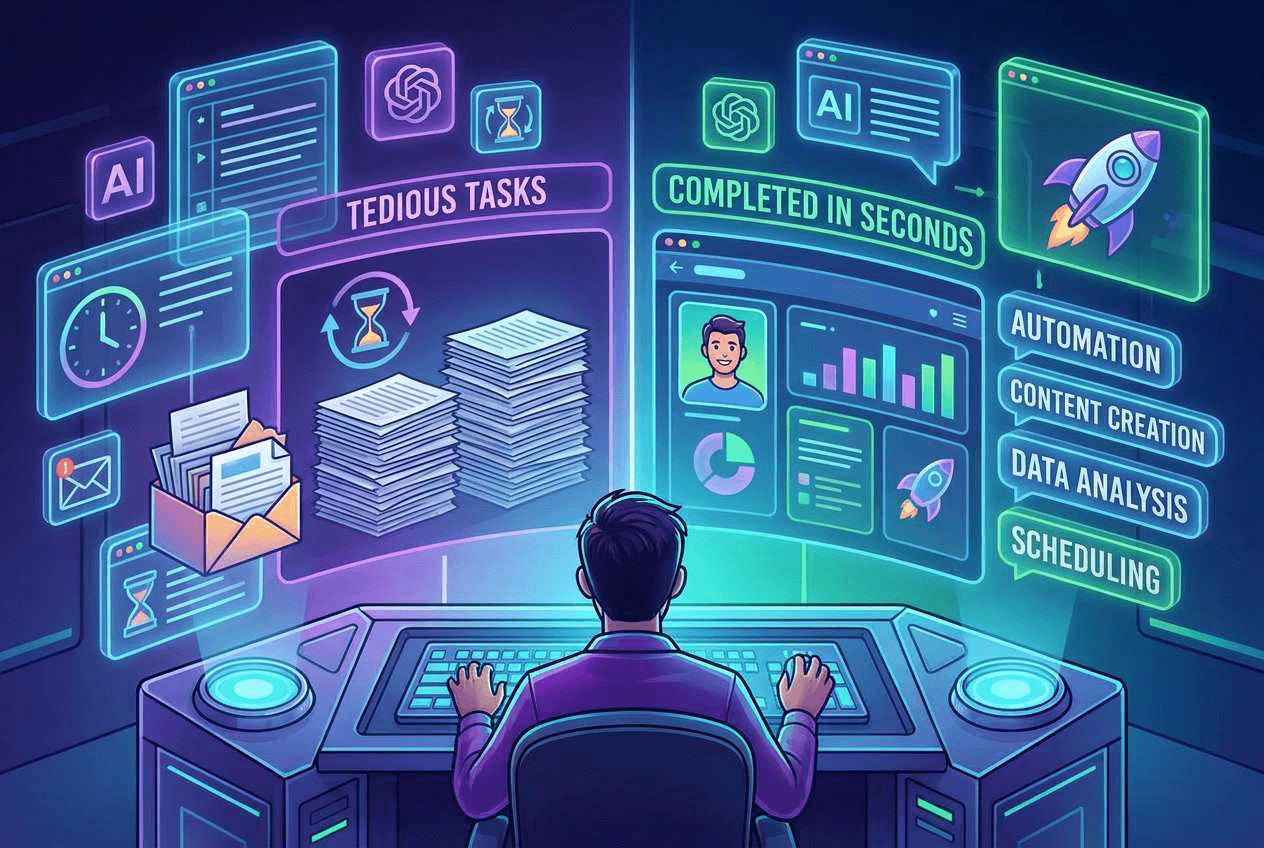
AI tools flood the market — which ones turn grueling grunt work into instant one-click completion?
With AI advancing at breakneck speed these days, anyone who hasn’t tried drafting weekly work reports or building PPT...
Jul 8, 2026
News ArticlesOCR Extraction
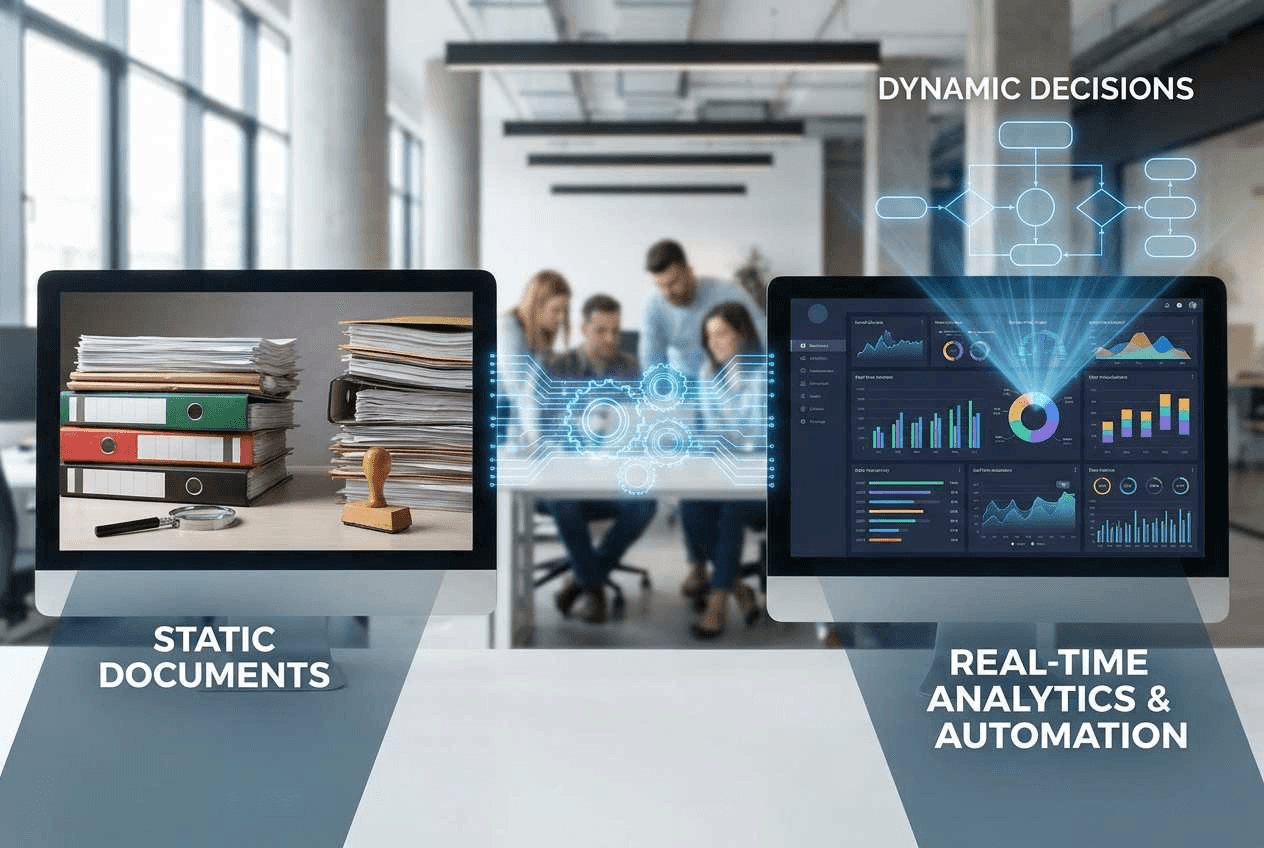
Office Automation Advanced: How Docify Converts Static Documents into Dynamic Business Decisions
In the journey of digital transformation, enterprises often face a common dilemma: despite deploying numerous systems...
Jul 8, 2026