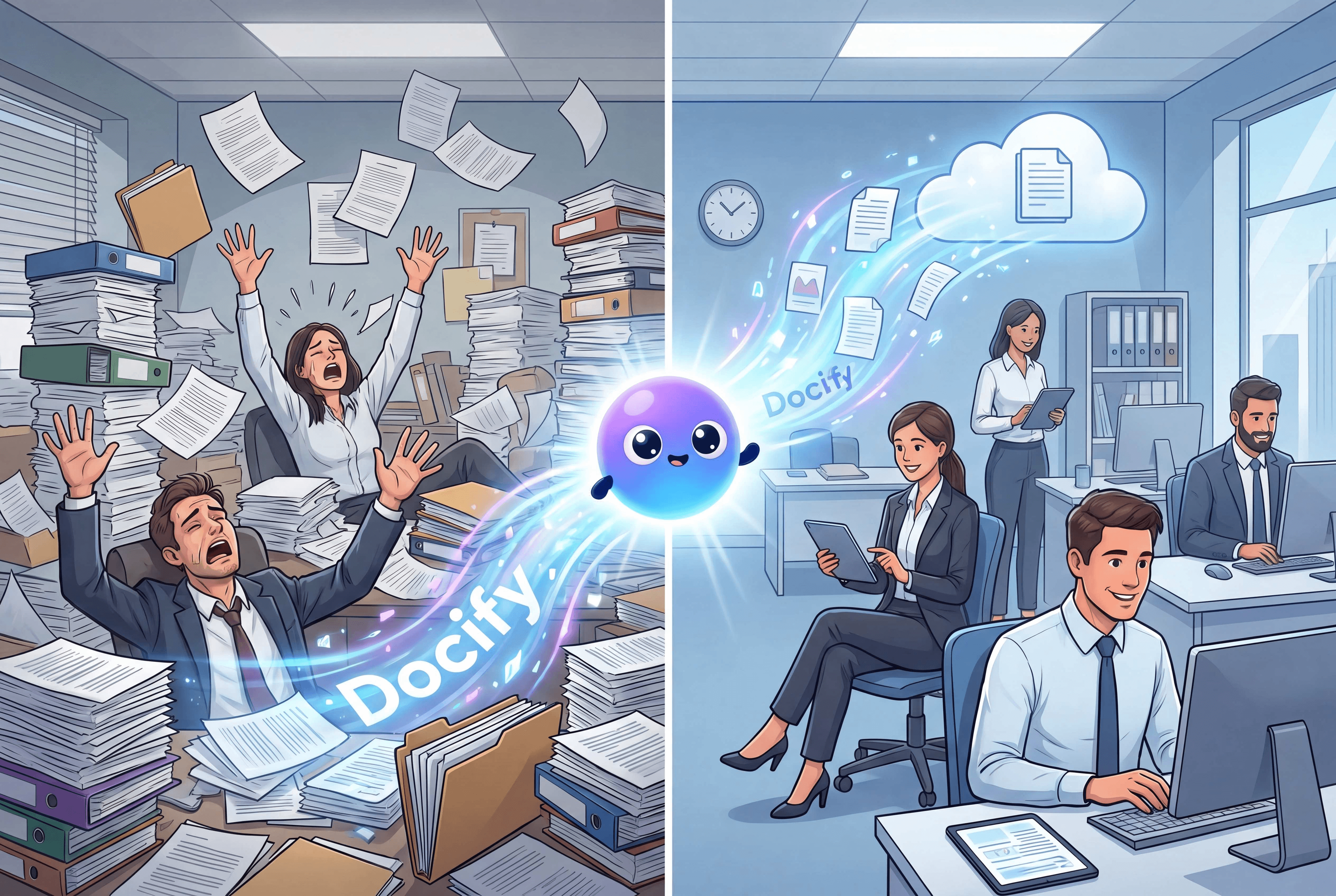
A fast-growing AI SaaS company headquartered in Austin, with about 120 employees—over 65% of them in R&D. The company was in a scale-up phase, shipping a major product iteration every quarter, and the pressure to expand the team never let up. The founder and CEO stayed closely involved in core management, while the entire operations and HR function was handled by just three people—responsible for everything from recruiting and onboarding to administration and contract management. This kind of setup is far from unusual in the tech space. Product cycles are short, turnover in technical roles is constant, and project-related contracts pile up quickly—yet the back-office team almost always runs on a minimum viable configuration.
300 Resumes and 20 Contracts a Month—With Only Three People on the Team
The thing that kept the HR team up at night wasn't the business—it was hiring. With each new product cycle came a fresh wave of open roles: front-end, back-end, algorithms, QA, product management. The range was wide, and the requirements varied significantly from role to role. Every week, the HR team toggled between multiple recruiting platforms, manually downloaded resumes, read through each one, flagged candidates, and forwarded them to the relevant tech lead for a second pass. On a typical month, the company received over 300 resumes for technical positions alone—and only two people on the HR team were doing the actual screening. On top of that, they handled interview scheduling, offer follow-ups, and onboarding. It was essentially non-stop. At the same time, the volume of partnership agreements, channel contracts, and technology outsourcing deals was growing steadily. The company had no dedicated legal counsel, so every contract review fell on the head of operations. A typical technology service agreement ran over a dozen pages—each one requiring a line-by-line check on acceptance criteria, intellectual property ownership, confidentiality terms, and liability clauses. When an urgent signing came up, staying up late to review contracts became routine. On one occasion, a clause in an outsourcing contract regarding source code IP rights was drafted ambiguously. The head of operations spent two consecutive evenings combing through the language before catching the issue and asking the other party to revise it. No real damage was done, but everyone knew this kind of reliance on manual effort wasn't sustainable. Then there was the daily grind of repetitive tasks: weekly report aggregation, project status tracking, expense summary, client document filing. None of these was a crisis on its own, but together they consumed hours every week—hours the team simply didn't have.
They Tried Hiring and Outsourcing—Neither Solved the Problem
The most obvious answer was to hire more people. But for an internet company, back-office headcount is always under scrutiny. A full-time legal hire would cost a significant annual salary, and the contract volume wasn't high enough to justify it. Beyond cost, finding someone who understood both technology and contract law was not easy. They also tried traditional applicant tracking systems. But these were mostly workflow tools—they didn't help evaluate whether a candidate actually matched a technical role. The resumes still had to be read by a human; they were just being read in a different interface. For a while, they outsourced contract review. But the external reviewers didn't understand the company's business model or technical context, so their assessments were either overly cautious or missed the real issues—which only created more rework for the internal team. After months of trial and error, a sobering realization set in: they had cycled through tools, but the core problem had never been addressed. Screening resumes still depended on human eyes. Reviewing contracts still depended on human judgment. None of the traditional tools actually helped with the work that required the most effort.
The Biggest Fear During Evaluation: Finding Another Tool That Looks Good but Doesn't Deliver
When the team first started looking at AI-powered office tools, expectations were low. The head of operations was candid about the biggest concern at the time: Would these AI tools actually understand how an internet company works? Would they genuinely help, or would they just add more steps to existing processes? After evaluating several products on the market, the team noticed a pattern. Most tools offered only a single function—resume parsing in isolation, or a contract template library—completely disconnected from the company's actual workflow. Others had steep implementation requirements, demanding that all existing data be reorganized and new processes built from scratch—something the lean team simply didn't have the bandwidth for. The decision to go with Docify came relatively quickly. What stood out was the practical starting point: no need to rebuild the company's data infrastructure. The team could simply upload the resume files and contract documents they already used every day, and the system was ready. The team was able to complete the setup and configuration on their own.
Three AI Capabilities, Targeted at the Three Most Labor-Intensive Areas
Once implemented, what made the team feel "this time is different" was that each feature addressed a pain point they had been dealing with directly. Recruiting was the first area where results showed.** The HR team started feeding incoming resumes directly into the AI resume screening function. The system automatically parsed candidate information and scored matches against the job description. Tech leads no longer had to wait for manual forwarding—they could see a ranked list of candidates in their own workflow. What used to take 3 to 4 hours of initial screening per technical role was reduced to about 30 minutes—roughly a 3x improvement in efficiency. For contract review, the AI contract review function took over the most time-consuming part.** The head of operations uploaded technology service agreements, outsourcing contracts, and NDAs into the system. The AI automatically scanned for potential risk points—ambiguously worded IP ownership clauses, unclear acceptance criteria, unbalanced liability terms—and surfaced them with annotations. The initial review time for each contract dropped from 2 to 3 hours to around 20 minutes. More importantly, the previous pattern of relying entirely on one person's experience and late-night effort was significantly reduced. For repetitive daily tasks, AI agents took over weekly report collection and aggregation, project status updates, and preliminary expense verification.** The team configured scheduled tasks, and the agent automatically pulled data from multiple collaboration tools, formatted it, and pushed it to the right person. The head of operations estimated that these routine workflows saved the team at least 7 to 8 hours per week.
If It Can Be Automated, Don't Put It on People
Two months in, the team did an internal review. On the recruiting side, the average cycle from initial screening to interview invitation dropped from 5 business days to 2. On the contract side, review coverage went from spot-checking only the most critical agreements to covering every partnership-related contract. On the daily operations side, the hours saved each week were reallocated to product research and go-to-market strategy. At the review meeting, the head of operations said something that stuck with the founder: "I used to think handing things over to AI was risky. After trying it, I realized the real risk was leaving a mountain of repetitive work on people who should be doing higher-value things." For a technology-driven company, this team understood as well as anyone that the most valuable work is never repetitive execution—it's judgment and decision-making. Letting AI handle the structured, rule-based processes, and letting people return to work that requires thinking and creativity—that, in itself, is how an internet company should run.
For Most Asset-Light, Talent-Heavy, Fast-Paced Tech Companies, This Model Is Repeatable
What makes the technology, internet, and telecom sector unique is that while the assets are light, the talent and the contracts are heavy. Team expansion happens in short cycles, roles evolve quickly, and hiring pressure is a constant reality. Partnership agreements, outsourcing contracts, and IP-related documents are dense, yet dedicated legal support is rarely available in-house. Daily tasks may seem small individually, but together they compound into a drag on the entire team's rhythm. This AI approach is highly applicable to similar companies. It doesn't require changing existing workflows, large-scale data migration, or adding headcount. From recruitment efficiency and contract risk control to daily workload reduction, the return on investment at each step is clear. For growth-stage tech companies running lean back-office teams, it is a direction worth considering early.