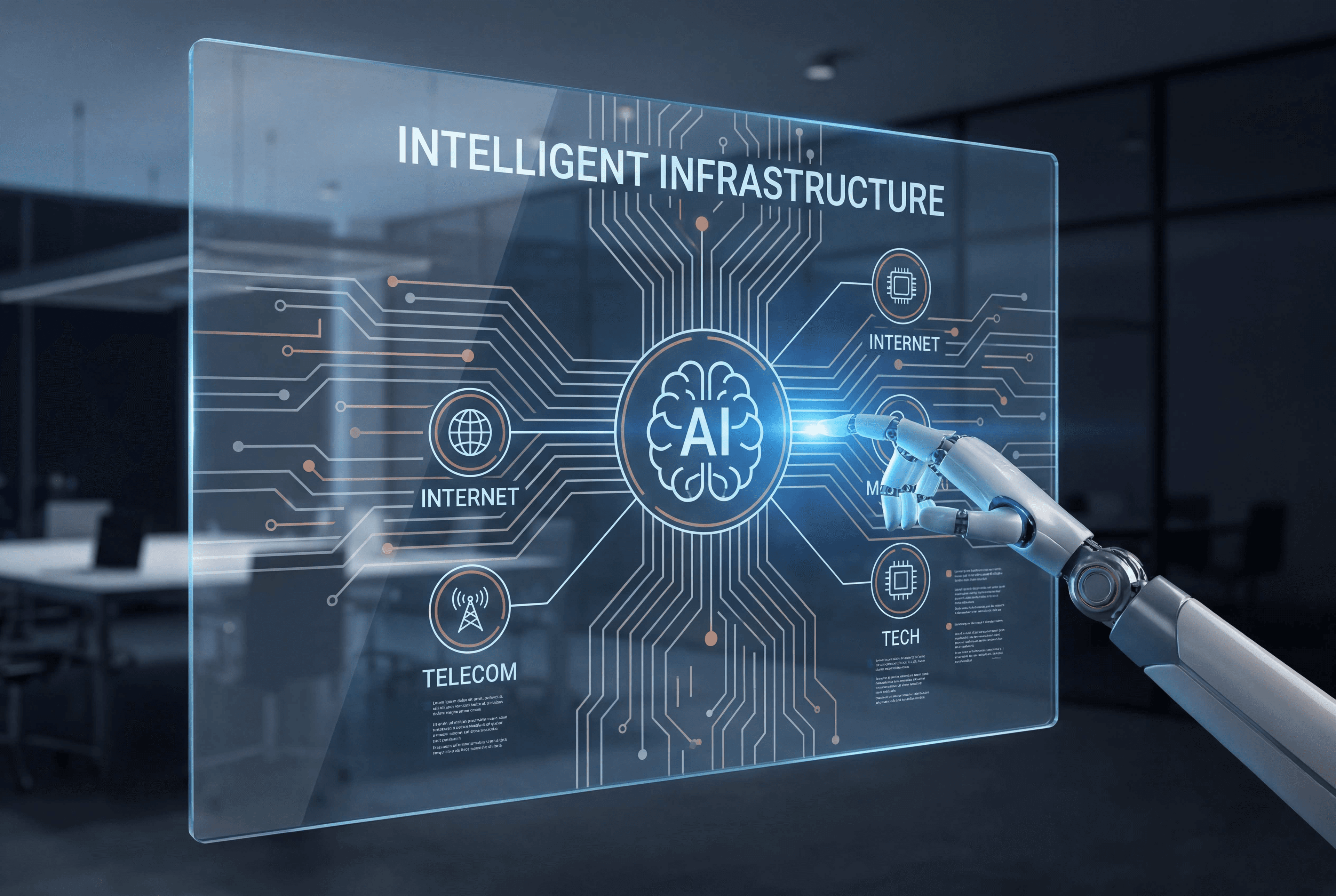
In the TMT (Technology, Media, and Telecom) industries, rapid corporate growth often brings an exponential increase in business complexity. As an organization scales from a hundred to thousands of employees, or as its footprint expands from a single market to a global stage, the "makeshift solutions" that once worked—such as manual data entry, relying on group chats for information sharing, or decentralized document storage—quickly become bottlenecks that hinder organizational efficiency. How can we leverage underlying technology iterations to ensure that the document processing chain supporting business workflows keeps pace with growth? This is a core challenge that many mid-to-large-scale tech companies must urgently address during their digital transformation.
The "Invisible Costs" of Scaling: Why Inefficiency Goes Unnoticed
In the early stages of rapid growth, minor frictions in document workflows are often masked by high growth margins. However, as organizations enter the scale-up phase, these issues begin to exert structural negative impacts: Data Silos and Collaboration Costs: R&D documentation, O&M tickets, and compliance contracts are scattered across different departments and platforms. This fragmentation slows down information retrieval and increases cross-departmental coordination costs. Repetitive Data Processing Load: As order volumes increase, manual data entry and reconciliation consume a significant portion of the team's time. This not only limits the output of core R&D and operations personnel but also significantly inflates labor costs. Compliance and Consistency Pressures: In a high-frequency business environment, ensuring the compliance of contract terms and the logical consistency of production data has become a systemic challenge for management.
Docify: Building the Data Processing Infrastructure for High-Growth Organizations
The design logic behind Docify is not just a simple stack of tools; it serves as an "Intelligent Document Workflow Foundation" for high-growth enterprises, addressing document complexity through standardization and AI-driven automation. 1.High-Precision Standardized Data Processing Docify’s AI engine accurately recognizes various document formats (PDFs, scans, images) and transforms them into standardized structured data. This technology converts discrete, unusable data at the edge of the business into corporate data assets, reducing the cost of data cleaning and validation as information moves between systems. 2. AI Agent-Driven Task Automation For repetitive business workflows, Docify Agent provides an automation solution based on data logic. Agents can execute classification, aggregation, and matching tasks based on parsed business data and preset rules. For example, when processing bulk sales reports, the Agent performs data analysis through logical computation; in supply chain verification scenarios, it executes logical cross-checking of multi-source documents. This mechanism frees human staff from tedious calculations and comparisons, allowing them to focus on process review and exception management. 3.Intelligent Retrieval and Application of Knowledge Assets Through the Docify Knowledge Base engine, enterprises can consolidate scattered documents into a centralized knowledge hub. When employees need to retrieve specific parameters, clauses, or historical precedents during daily operations, they can obtain answers through natural language interaction. This not only improves accessibility but also establishes a closed-loop mechanism for continuous knowledge reuse, preventing knowledge loss due to employee turnover. Moving Toward Lean Operations In the journey of digital transformation, efficiency gains depend not only on updating business systems but also on revolutionizing the way foundational data is handled. Docify is committed to providing this core underlying momentum for enterprises. By normalizing document data, automating processing workflows, and intelligentizing knowledge bases, Docify helps enterprises build a highly scalable digital collaboration environment. This represents more than just a leap in efficiency; it is the critical support that enables an organization to maintain agility and decision-making accuracy when facing complex business growth.